
What the world's Blue Zones actually eat
Poma AI · June 26, 2026 · 3 min read
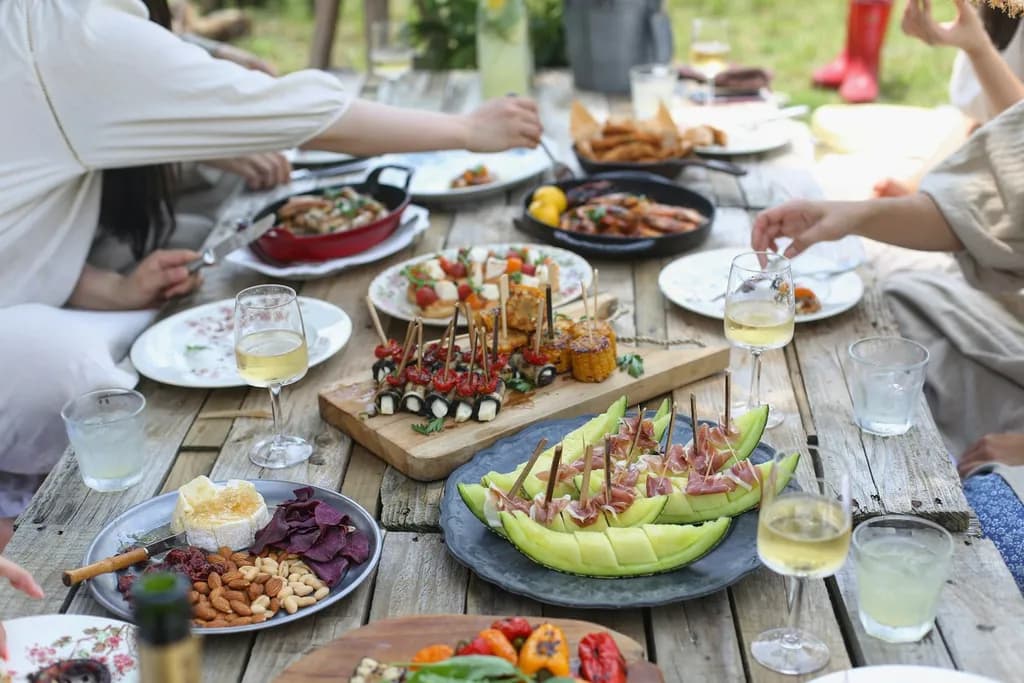
A handful of places around the world, often called Blue Zones, are known for an unusual number of people who reach their 90s and beyond in good health. Researchers have studied what these communities share. Diet is only one piece, alongside daily movement, strong social ties, and a sense of purpose, and the food threads turn out to be simple enough to borrow.
These are population observations rather than controlled experiments, so treat them as useful patterns rather than guarantees. Even so, the overlap between them is striking.
Where the Blue Zones are
The best known examples are Okinawa in Japan, Sardinia in Italy, Ikaria in Greece, the Nicoya Peninsula in Costa Rica, and Loma Linda in California. Different cultures, different climates, and very different cuisines, with similar results.
What their diets share
The specific dishes vary, but the building blocks rhyme.
Mostly plants
Vegetables, fruit, greens, and herbs make up the bulk of most meals. Plants supply the fiber and antioxidants that support slower aging.
Beans almost every day
Legumes such as black beans, lentils, fava beans, and soy show up daily in most Blue Zones. They are rich in fiber and plant protein and very filling.
Whole grains and tubers
Slow carbohydrates like whole grains, sweet potatoes, and other roots provide steady energy without the spikes of refined grains.
A handful of nuts
Regular nuts are common, and they bring healthy fats, protein, and minerals.
Little ultra processed food or added sugar
Traditional Blue Zone diets grew up before packaged food, so they are naturally low in the ultra processed foods and added sugar that crowd modern plates.
What this looks like on your plate
You can borrow the pattern without copying any single cuisine.
- Make beans or lentils a daily habit, not an afterthought.
- Fill most of the plate with vegetables and whole grains.
- Treat meat as an occasional ingredient rather than the main event.
- Snack on nuts and fruit.
- Keep sweets for celebrations.
If you change one thing, add a cup of beans or lentils to your day. It is the habit that comes closest to a shared Blue Zone secret.
How Poma fits in
A Blue Zone plate is plant heavy, bean friendly, and light on processed food. Poma scores each meal you log for its effect on aging, sleep, skin, and energy, so you can see how your everyday meals compare to that pattern and adjust over time.
Poma scores meals like these for you.
Snap a photo and watch how each meal moves your pace of aging.
Download appThe takeaway
The Blue Zones do not run on a single magic food. They run on mostly plants, daily beans, whole grains, and very little processed food, eaten in good company. Borrow those habits and you bring the most useful part of the pattern to your own table.
Sources
- Harvard T.H. Chan School of Public Health, The Nutrition Source, Diet Review: Mediterranean Diet
- Harvard T.H. Chan School of Public Health, The Nutrition Source, Healthy Eating Plate
- World Health Organization, Healthy diet
Frequently asked questions
Related articles
The Mediterranean diet: why it keeps winning for longevity
The Mediterranean pattern tops almost every ranking of healthy eating. Here is what it looks like, why it supports longevity, and how to start.

Polyphenols: the plant compounds linked to slower aging
Polyphenols are a large family of plant compounds tied to lower inflammation and oxidative stress. Here is where to find them and why they matter.